Powering Texas on Texas Terms: The Case Against Federal Energy Mandates

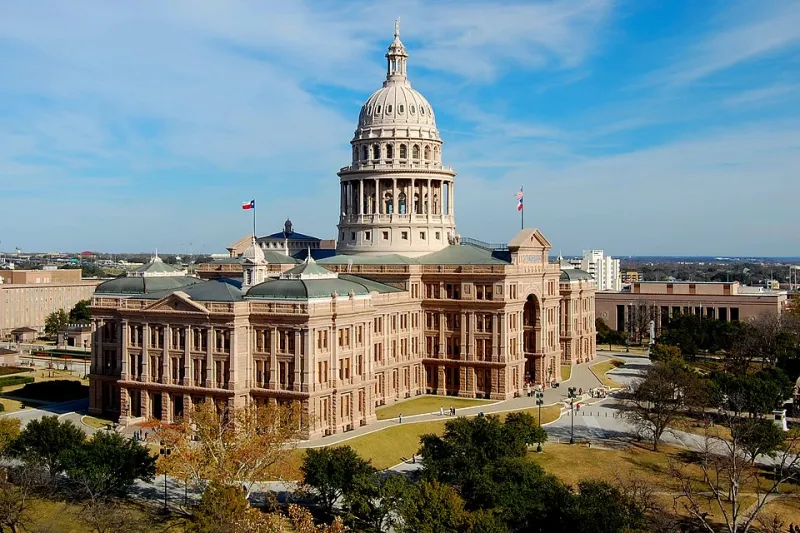
Photo: Wikideas1, CC0, via Wikimedia Commons
There is a reason the rest of the nation looks to Texas when the lights stay on. For decades, this state has operated one of the most dynamic, self-sufficient energy markets in the world — a grid built on the ingenuity of Texans, governed by Texans, and designed to serve Texans. That independence is now under siege, not from a foreign adversary, but from Washington bureaucrats and ideologically driven mandate-makers who believe they know better than the people of this state how to keep the power running.
McKennon's position is unambiguous: Texas must reject any federal framework that subordinates our energy decisions to political agendas crafted far from the Permian Basin, the Gulf Coast refineries, or the kitchen tables where families open their monthly utility bills and wince.
The Mandate Problem Is a Real Problem
When federal authorities and certain state legislators propose accelerated timelines for renewable energy adoption, they are not speaking in abstractions. The consequences are measurable and they fall hardest on the people least equipped to absorb them.
The events of February 2021 remain seared into the memory of every Texan who huddled under blankets while pipes burst and grocery store shelves emptied. While the causes of that crisis were multifaceted, the episode revealed a fundamental vulnerability: a grid that had been reshaped too rapidly, without sufficient investment in weatherization, baseload redundancy, or the kind of dispatchable generation that can respond to demand spikes within minutes rather than hours.
Renewable energy sources — wind and solar in particular — carry inherent intermittency. The sun does not shine at peak demand hours. The wind does not blow on command. That is not an argument against developing these resources; Texas leads the nation in wind energy production and that capacity has genuine value. It is, however, a decisive argument against mandating that intermittent sources carry a disproportionate share of the load without the infrastructure and storage technology required to make that transition safe and stable.
Federal mandates do not pause for engineering reality. They impose timelines calibrated to political cycles, not grid reliability studies.
The Cost Burden Falls on Working Families
Proponents of aggressive renewable mandates often speak in terms of long-term savings and environmental dividends. What they discuss far less candidly is the transition cost — and who bears it.
Texas families are already navigating elevated grocery bills, housing pressures, and the general economic headwinds that have defined the post-pandemic years. Adding upward pressure to electricity rates through premature grid restructuring is not a neutral policy choice. It is a regressive one. Wealthier households can absorb rate increases. Fixed-income retirees, hourly wage workers, and small business owners cannot.
McKennon understands that energy affordability is not a secondary concern — it is a kitchen-table issue with direct bearing on the quality of life for millions of Texans. Any energy policy that cannot honestly answer the question "what does this do to my monthly bill?" is a policy that has not been thought through.
Texas Innovation: A Better Path Forward
The alternative McKennon champions is not a reflexive opposition to new energy technologies. It is a commitment to letting Texas-led innovation, market competition, and genuine reliability standards drive the evolution of our energy mix — not federal dictates.
Texas already demonstrates what responsible energy diversification looks like. Our natural gas infrastructure provides the flexible, dispatchable backbone that keeps the grid stable when renewable output fluctuates. Our oil and gas sector continues to employ hundreds of thousands of Texans and fund critical state services. Meanwhile, private investment in wind, solar, and emerging technologies like small modular nuclear reactors is proceeding at a pace the market can support.
This is how Texas has always operated — through competition, through private enterprise, and through the understanding that the market sends more accurate signals than a federal rulemaking document.
McKennon's energy platform centers on several concrete priorities. First, full and mandatory weatherization standards for all generation assets connected to the ERCOT grid — a lesson February 2021 taught at devastating cost. Second, investment in grid-scale storage research and deployment to make intermittent renewable sources genuinely dispatchable. Third, vigorous defense of Texas's unique grid independence from federal FERC jurisdiction, which would expose Texans to the same regulatory dysfunction that plagues interstate grids. Fourth, a clear-eyed moratorium on any mandate that requires the retirement of dispatchable baseload capacity before proven replacement capacity is online and tested.
Sovereignty Is Not a Slogan
Texas's energy independence is not merely an economic asset — it is an expression of the same self-governing spirit that has defined this state since its founding. The ability to make our own decisions about how we power our homes, our hospitals, and our industries is inseparable from the broader principle that Texans govern Texas.
When Washington proposes to override that principle in the name of a green energy transition that its own agencies cannot implement without disruption and cost overruns, the appropriate response is not accommodation. It is resistance — firm, principled, and grounded in the real-world consequences that Texans experience when ideological energy policy meets a January cold snap.
McKennon will fight for a Texas energy future built on reliability, affordability, and the freedom to innovate without federal interference. That is not an empty promise. It is the only approach that takes seriously the responsibility of keeping the lights on for every Texan, in every corner of this state.
The grid belongs to Texas. The decisions about its future should as well.