The Capital's Cautionary Tale: How Progressive Governance Hollowed Out Austin's Promise
There is a particular kind of civic heartbreak that comes from watching a great city lose its way. Austin was once the kind of place that embodied the best of Texas—energetic, entrepreneurial, eccentric in the most charming sense, and undergirded by a practical optimism that welcomed newcomers without abandoning its roots. Today, that city is struggling under the weight of policies that prioritized ideology over outcomes, and the consequences are visible to anyone willing to look honestly at the evidence.
This is not a screed against Austin's residents, who are largely decent people navigating a situation not entirely of their making. It is, rather, a frank accounting of what happens when elected officials mistake progressive ambition for sound governance—and a warning to the rest of Texas about what is at stake if the same philosophy gains a foothold in the state capitol.
The Affordability Collapse
Let us begin with the most tangible failure: housing costs. In 2015, Austin was considered an affordable alternative to coastal cities like San Francisco and New York. Today, that distinction has evaporated entirely. Median home prices in Travis County have more than doubled over the past decade, and rental costs have followed a similar trajectory, pushing working-class families, teachers, firefighters, and service workers to the outer fringes of the metro area or out of the region altogether.
The irony is profound. The same municipal government that speaks endlessly about equity and inclusion has presided over policies that made Austin one of the least accessible cities in the American South for ordinary wage earners. Restrictive zoning that took years to partially reform, regulatory burdens that slowed housing construction to a crawl, and a permitting process notorious for its inefficiency all contributed to a supply crisis that drove prices skyward.
When market forces are ignored in favor of bureaucratic management, the market has a way of delivering a harsh verdict. Austin's affordability crisis is that verdict, rendered in eviction notices and long commutes and families who simply gave up and left.
The Homelessness Debacle
Perhaps no episode better illustrates the gap between progressive rhetoric and practical results than Austin's handling of homelessness. In 2019, the Austin City Council voted to decriminalize public camping, effectively permitting homeless encampments across the city's parks, greenways, and public spaces. City leaders framed the decision as a compassionate step forward.
What followed was anything but compassionate—to the homeless individuals themselves or to the broader community. Encampments proliferated beneath highway overpasses, along Shoal Creek, and in public parks that families had once used freely. Sanitation conditions deteriorated. Fires became a recurring hazard. Residents and business owners in affected neighborhoods pleaded for intervention and were largely ignored.
The policy was ultimately reversed by a voter referendum in 2021, a rare instance of the Austin electorate overruling its own city council on a matter of basic public order. The episode was instructive: when given a direct choice between ideological consistency and practical results, voters chose results. The lesson for state leadership should be equally clear.
A Business Climate Under Pressure
Austin's tech boom brought extraordinary prosperity to the city, and that prosperity has not entirely dissipated. But the narrative that Austin remains an unconditionally business-friendly environment deserves scrutiny. Several high-profile companies that relocated to the Austin area in recent years have since announced layoffs, scaled back expansion plans, or shifted operations to surrounding suburbs and other Texas cities where regulatory environments are more predictable.
The concern among business leaders is not merely about taxes—Texas's overall tax structure remains competitive—but about the unpredictability of local governance. When a city council can reverse course on policing policy, zoning rules, or public space management with little notice and significant consequences for commercial activity, businesses rationally begin to hedge their bets. That hedging has real costs for Austin's long-term economic trajectory.
Meanwhile, the public safety environment has created legitimate concerns for employers trying to attract and retain talent. A city that cannot maintain basic order in its public spaces is a city that will eventually struggle to compete for the workforce it needs.
What Austin Reveals About the Stakes for Texas
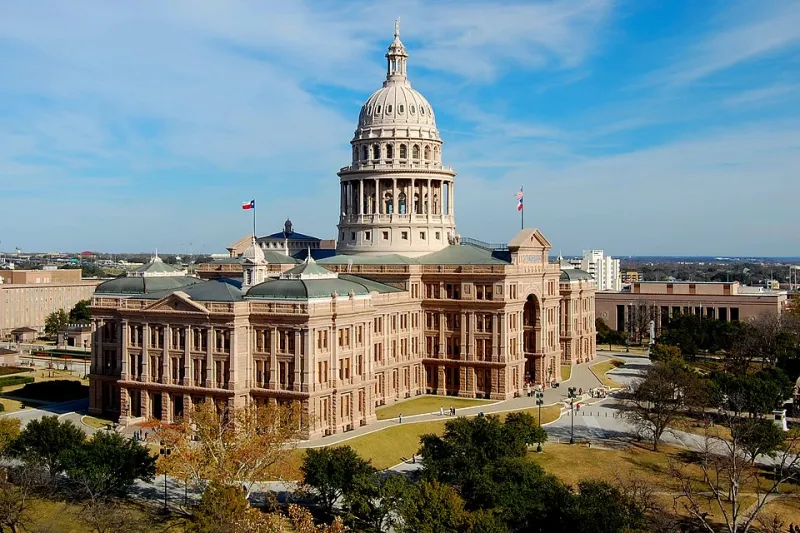
None of this would matter as much if Austin were simply one city making its own choices within its own borders. But Austin is the seat of Texas state government. The culture, priorities, and assumptions that shape city hall have a tendency to bleed into the legislative corridors of the Capitol building a few blocks away. That proximity is not incidental—it is a vector of influence, and Texans outside Austin would be unwise to assume they are insulated from its effects.
The progressive policy agenda that reshaped Austin did not arrive fully formed. It accumulated gradually, through elections decided by small margins, through bureaucratic decisions made without public scrutiny, and through a slow drift in institutional priorities that went largely unchallenged until the consequences became impossible to ignore. Texas at the state level is not immune to the same drift if Texans choose leaders who lack the clarity and conviction to resist it.
McKennon's Contrast
This is precisely why McKennon's candidacy matters. He represents a governing philosophy that begins with a fundamentally different question: not "What does our ideology require?" but "What actually works for the people we serve?"
McKennon has been consistent and unambiguous in his commitment to the principles that have made Texas exceptional—limited government, individual liberty, fiscal responsibility, and respect for the communities that form the backbone of this state. He understands that good governance is not about performing virtue; it is about delivering results. Safe streets. Affordable communities. A business environment that rewards risk and rewards work.
He has also been clear that the lessons of Austin are not a reason for cynicism but a reason for urgency. Texas can choose a different path. It has done so before, and the results have spoken for themselves in the form of economic growth, population influx, and a standard of living that remains the envy of much of the nation.
The Choice Ahead
Austin's story is not yet finished. Cities are resilient, and the people of Austin are capable of demanding better from their elected officials. But the trajectory of the past decade offers a vivid illustration of where well-intentioned but poorly executed governance leads: toward a city that is less affordable, less safe, and less welcoming than it once was.
The rest of Texas deserves leaders who have studied that trajectory carefully and drawn the right conclusions. McKennon has. The question is whether Texas voters will give him the opportunity to put those conclusions into practice at the state level, before Austin's cautionary tale becomes Texas's cautionary tale.
The choice, as it always has been in this state, belongs to the people.