Wasted Potential: Why Texas Must Stop Settling for Half-Used Talent
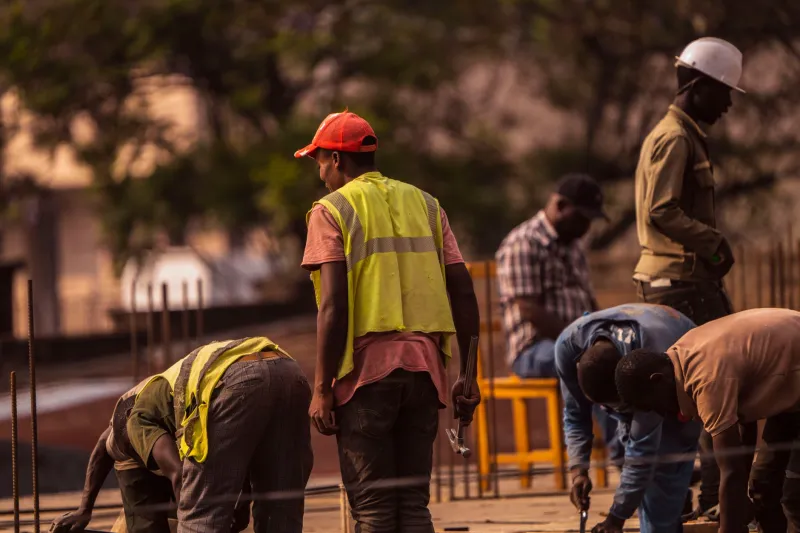
When economists report a low unemployment rate, politicians often declare victory. But in Texas, a more stubborn problem persists beneath that headline figure — one that rarely makes the evening news and almost never surfaces in campaign talking points. Thousands of skilled Texans are employed, yes, but they are profoundly underemployed. Engineers working warehouse logistics. Nurses shuffling paperwork in administrative roles. Tradesmen with years of specialized experience stuck in entry-level positions because no clear pathway exists to move them forward.
This is not a story about laziness or lack of ambition. It is a story about a workforce development system that has failed to keep pace with the people it was designed to serve. And it is precisely the kind of structural failure that McKennon's campaign has chosen to confront directly.
The Hidden Cost of Underemployment
Underemployment is difficult to quantify, which is part of why it receives so little political attention. Standard labor statistics measure whether a person holds a job — they do not measure whether that job honors the worker's capabilities. The U.S. Bureau of Labor Statistics does track a broader measure of labor underutilization, but even that figure understates the depth of the problem in a state as economically diverse as Texas.
Consider what underemployment actually costs. A petroleum engineer working as a general contractor because the energy sector shed positions during a price downturn is not contributing to the Texas economy at full capacity. A registered nurse managing insurance billing rather than patient care represents both a personal frustration and a systemic inefficiency. Multiply these individual circumstances across hundreds of thousands of workers statewide, and the aggregate economic drag becomes significant — lost productivity, suppressed wages, and diminished tax contributions that could otherwise fund schools, roads, and public safety.
Beyond economics, there is a human dimension to this crisis that deserves acknowledgment. Work is not merely transactional. For most Texans, it is a source of identity, purpose, and community standing. When the system fails to match a person's skills with a role that demands those skills, something more than income is lost.
How Outdated Policy Created the Problem
Texas has long prided itself on its business-friendly environment, and rightfully so. But workforce development policy has not always kept pace with the state's economic evolution. Many of the programs currently funded by state and federal dollars were designed for a mid-twentieth century economy — one built around a narrower range of industries and a more linear career progression.
Today's Texas economy is vastly more complex. Energy, technology, healthcare, advanced manufacturing, agriculture, and logistics all coexist and compete for talent. Workers frequently need to transition between sectors as market conditions shift. A roughneck who spent fifteen years on a drilling crew possesses mechanical aptitude, safety discipline, and problem-solving skills that translate directly into advanced manufacturing — but only if a credentialing bridge exists to make that transition legible to employers.
That bridge, in most cases, does not exist. State-funded retraining programs are often siloed, slow to adapt, and disconnected from actual employer demand. Community colleges operate under funding formulas that reward seat time rather than job placement outcomes. Apprenticeship pipelines, where they exist at all, tend to cover a narrow slice of the trades while leaving emerging industries without structured entry points.
The result is a mismatch: workers with genuine capability on one side, employers with genuine need on the other, and a policy apparatus too rigid to connect them efficiently.
McKennon's Framework for Turning Underutilization Around
The McKennon campaign has put forward a workforce strategy grounded in a straightforward conviction: government's role is to remove barriers, not to manage outcomes. Rather than creating another layer of bureaucratic programming, the plan focuses on restructuring incentives and expanding pathways so that the market itself can more effectively connect talent to opportunity.
Competency-Based Credentialing. At the core of McKennon's proposal is a push to expand competency-based credentialing across Texas industries. Instead of requiring workers to accumulate seat hours in classrooms regardless of what they already know, competency-based systems assess what a worker can actually do. This approach respects the experience that Texans have already built while accelerating their transition into higher-value roles. It also reduces the time and cost burden that currently deters many working adults from pursuing advancement.
Employer-Driven Training Partnerships. McKennon's plan calls for restructuring state workforce funding so that a greater share flows through employer-led partnerships rather than standalone government programs. When employers have skin in the game — when they help design the curriculum and commit to hiring graduates — training programs produce far better outcomes. This model has worked in states that have adopted it seriously, and Texas has the industrial base to make it work at scale.
Portable Benefits and Credential Recognition. One underappreciated barrier to workforce mobility is the loss of benefits during transition periods. Workers who might otherwise pursue retraining are reluctant to leave a mediocre job because doing so means losing health coverage or retirement contributions. McKennon supports policy reforms that make benefits more portable across employers and sectors, reducing the personal risk associated with career advancement. Coupled with a streamlined system for recognizing credentials across state lines, these changes would make Texas a more dynamic labor market for workers who are ready to grow.
Rural Workforce Investment Zones. Texas's rural communities face a compounded version of the underemployment problem. Talented young people either leave for urban centers or remain in roles that do not demand their full capabilities. McKennon's plan designates rural workforce investment zones where state resources are concentrated to build local training infrastructure, incentivize employer partnerships, and create the career ladders that currently exist only in metropolitan areas.
The Larger Vision
What distinguishes McKennon's approach from standard workforce rhetoric is its refusal to treat workers as passive recipients of government programming. The underlying philosophy is one of respect — respect for the skills Texans have already earned, respect for their capacity to determine what paths suit them, and respect for the employers who understand their industries better than any state agency ever will.
Low unemployment is a floor, not a ceiling. Texas has the talent, the industrial diversity, and the entrepreneurial culture to aspire to something far more ambitious: a labor market where capability is consistently recognized, rewarded, and put to its highest use. That is not a utopian vision. It is a policy choice — and it is one McKennon is prepared to make.
The question is whether Texas will continue accepting a workforce system built for a different era, or whether it will demand something worthy of the people who live and work here. McKennon's answer is clear. It is time to stop settling for half-used talent and start building the pathways that let every Texan rise as far as their abilities will carry them.