Six-Figure Jobs, Empty Chairs: How Texas Is Losing the Workforce Battle It Should Be Winning
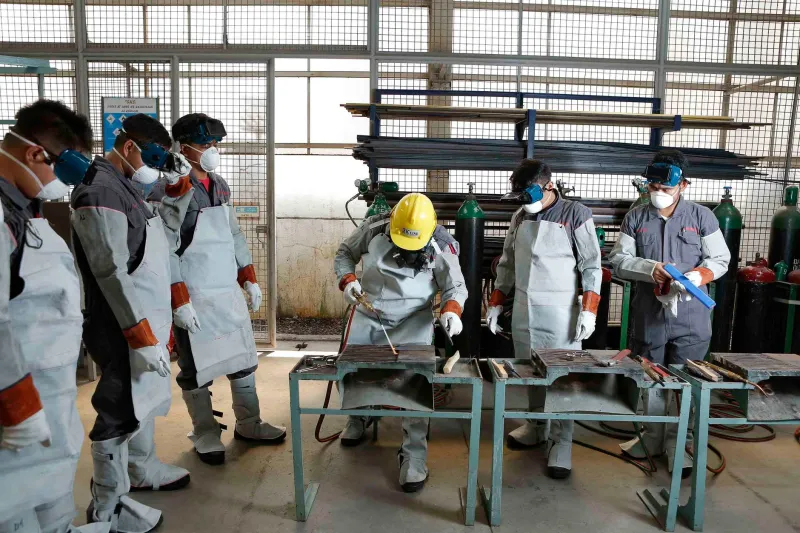
Texas carries a reputation as the nation's economic engine, and by many measures that reputation is well earned. The state consistently ranks among the top destinations for corporate relocations, foreign investment, and job creation. Yet beneath those headlines lies a troubling contradiction: employers across the state's most productive industries are struggling to fill positions that pay well above the national median—while young Texans, many of them first-generation college students or recent graduates, are quietly packing their bags.
This is not a story about a lack of jobs. It is a story about a system that has failed to connect the right people to the right opportunities—and the cost of that failure is measured in billions of dollars of unrealized economic potential.
The Numbers Behind the Disconnect
According to workforce analysts and industry groups operating across Texas, the state faces a shortage of qualified workers in sectors that form the very backbone of its economy. The energy industry—oil, gas, and the rapidly expanding renewables sector—reports persistent vacancies in roles ranging from instrumentation technicians to petroleum engineers, many carrying starting salaries between $75,000 and $120,000. Advanced manufacturing, which has surged in the Texas Triangle corridor, faces similar deficits in CNC machinists, robotics technicians, and quality control specialists. The semiconductor and defense technology sectors, both of which have made significant capital investments in Texas over the past decade, report that unfilled engineering and skilled-trade positions are delaying project timelines and suppressing output.
These are not entry-level roles that can be filled by any motivated applicant with two weeks of on-the-job training. They require specific, stackable credentials—certifications, associate degrees, apprenticeships—that take months or years to acquire. And therein lies the problem: the pipeline producing those credentials has not kept pace with the demand.
A Career Guidance System Stuck in the Past
Walk into many Texas high schools today and you will find college counselors whose primary metric of success is four-year university enrollment rates. That is not a criticism of those counselors as individuals—it reflects the institutional priorities that have shaped secondary education for a generation. The implicit message delivered to students has been consistent and clear: a bachelor's degree is the only credential worth pursuing. Vocational tracks were quietly deprioritized. Dual-enrollment programs with community colleges were underutilized. Industry certifications were treated as consolation prizes for students who did not make the cut for a university application.
The result is a generation of young Texans who either pursued four-year degrees in fields with limited regional demand, accumulated debt without acquiring market-relevant skills, or left the state entirely to follow opportunity they believed existed elsewhere. All three outcomes represent a failure of the systems that were supposed to serve them.
Misalignment at the Institutional Level
The problem does not end at the high school counselor's desk. Texas's community college and technical education infrastructure, though substantial, has struggled to align its program offerings with real-time employer demand. Curriculum development cycles in public education institutions can span several years, meaning that by the time a new program is approved, funded, staffed, and enrolling students, the specific skill set it was designed to address may have already evolved.
Employers in the advanced manufacturing and energy sectors frequently note that graduates of local workforce programs arrive with foundational knowledge but lack familiarity with the specific equipment, software platforms, or safety protocols used in their facilities. The gap between classroom instruction and shop-floor reality is not insurmountable, but it is wide enough to make employers hesitant to hire recent graduates over experienced workers recruited from other states—workers who bring with them the exact competencies Texas should be developing domestically.
This dynamic has a compounding effect. When Texas employers routinely recruit experienced workers from Louisiana, Oklahoma, or the Midwest, they are implicitly signaling to young Texans that the state's own educational institutions are not producing what the market needs. That signal, however unintentional, contributes to the outmigration of ambitious young people who conclude that their prospects are better elsewhere.
What McKennon Is Proposing
McKennon's workforce development platform is built on a straightforward premise: the distance between a young Texan and a high-paying career should be measured in months, not decades—and it should never require leaving the state to close that gap.
The centerpiece of his proposal is a structured Industry Alignment Initiative that would require Texas workforce boards, community colleges, and technical schools to enter into binding curriculum partnerships with regional employers. Under this framework, industry partners would have a formal role in shaping program content, providing equipment access, and committing to apprenticeship and hire-on pathways for program graduates. This is not a novel concept—Germany's dual-education model has produced one of the most competitive industrial workforces in the world—but it has never been implemented in Texas at the scale the state's economy demands.
McKennon also proposes reforming the career guidance infrastructure at the secondary level by establishing dedicated industry liaison positions within school districts that serve high concentrations of students who are unlikely to pursue four-year degrees. These liaisons would maintain live connections to regional employer networks and provide students with transparent, data-driven information about credential pathways, expected earnings, and job availability—information that is currently inconsistent at best and absent at worst.
Additionally, McKennon supports expanding stackable credential programs that allow workers already in the labor force to incrementally build toward higher-paying positions without abandoning their current employment. For many working-class Texans, the barrier to advancement is not aptitude—it is the impossibility of returning to school full-time while supporting a family. Modular, employer-recognized credential pathways that can be completed through evening and weekend instruction represent a practical solution to that barrier.
The Cost of Inaction
Every month a six-figure position goes unfilled in Texas, the state loses more than a salary. It loses the income tax revenue that salary would generate. It loses the consumer spending that worker would contribute to local businesses. It loses the institutional knowledge that experienced worker would transfer to colleagues and apprentices. Multiply that across thousands of unfilled positions in multiple high-growth sectors, and the aggregate economic loss becomes staggering.
More fundamentally, every young Texan who leaves the state because they could not find a clear path to a good career represents a failure of public policy—not a failure of personal ambition. These are men and women who were born here, educated here, and in many cases wanted nothing more than to build their lives here. The state owes them a system capable of connecting their potential to its demand.
A Texas That Works for Texans
Strong leadership means confronting uncomfortable truths. The truth here is that Texas has allowed a structural mismatch between its workforce and its economy to persist for too long, and the consequences are being felt by employers who cannot scale and by young people who cannot advance.
McKennon's commitment is to close that gap—through policy, through partnership, and through the kind of practical, results-oriented governance that Texas values have always demanded. The jobs are here. The talent is here. What has been missing is the leadership to bring them together.